
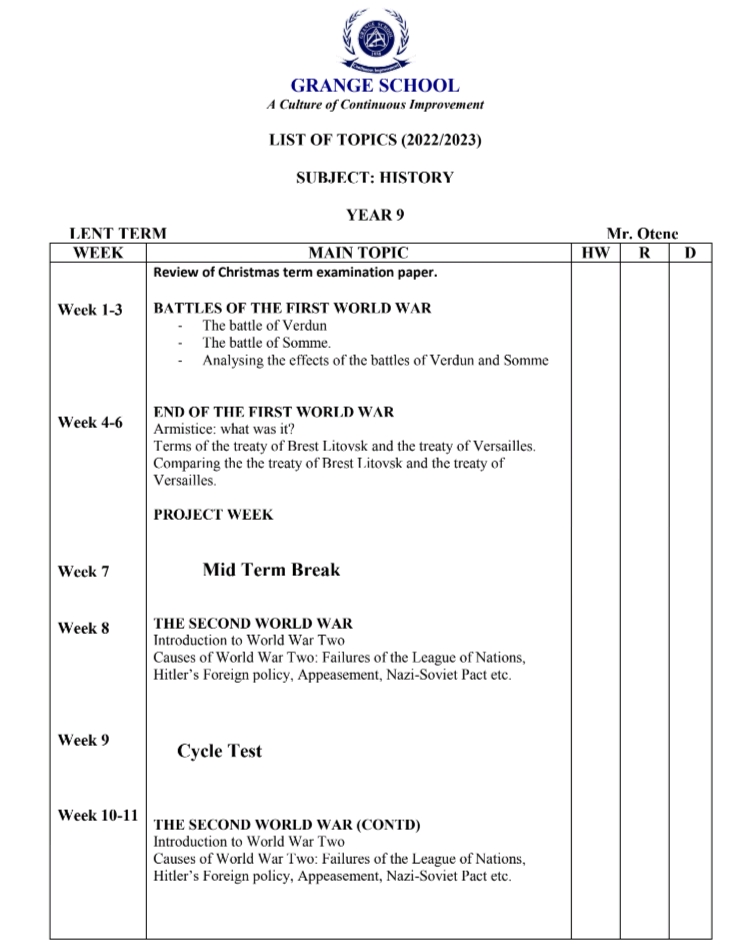
Week 1
World War 1: Overview
World War 1 was a big war that happened a long time ago, from 1914 to 1918. Many countries were involved, but the main ones were Germany, Austria-Hungary, and the Ottoman Empire on one side, and Great Britain, France, and Russia on the other. The war began when a man named Gavrilo Princip, who was from Bosnia, shot and killed the Archduke of Austria, Franz Ferdinand, and his wife, Sophie, on June 28, 1914. This event is considered the start of the war.
During the war, many battles took place in different parts of Europe, and also in Africa and Asia. Some of the most famous battles were the Battle of the Marne in France, the Battle of Gallipoli in Turkey, and the Battle of Verdun in France. Many soldiers and civilians were killed or injured during the war.
One of the most important events of the war was when the United States entered the war on April 6, 1917. This helped to tip the balance in favor of the countries fighting against Germany and its allies.
The war ended on November 11, 1918, when Germany signed an armistice agreement, or a truce, with the other countries. The treaty of Versailles was signed on June 28, 1919 officially ending the war.
Overall, World War 1 was a devastating conflict that resulted in many deaths and injuries, and also caused major changes in the world.
World War 1: Overview 2
World War 1, also known as the Great War, was a global conflict that lasted from 1914 to 1918. The war was sparked by the assassination of Archduke Franz Ferdinand of Austria-Hungary on June 28, 1914 by Gavrilo Princip, a Bosnian-Serb nationalist. This event set off a chain of events that led to the involvement of major world powers.
The war was fought between two main alliances: the Triple Entente, consisting of France, Russia, and the United Kingdom, and the Central Powers, consisting of Germany, Austria-Hungary, and the Ottoman Empire. Italy, Japan, and the United States later joined the Triple Entente, while Bulgaria joined the Central Powers.
The war began with a series of invasions and counter-invasions across Europe, with the most significant battles taking place in France, Russia and Belgium. The Western Front, a continuous line of trenches that stretched across Belgium and France, became the main theater of the war, where millions of soldiers died in battles such as the Battle of the Marne, the Battle of Verdun, and the Battle of the Somme.
The war also spread to other parts of the world, with major battles taking place in Africa, the Middle East, and Asia. One of the most notable was the Gallipoli campaign, where the British and French attempted to open up a new front in the Ottoman Empire, but ultimately failed with heavy losses.
The United States entered the war on April 6, 1917, and their involvement helped to tip the balance in favor of the Triple Entente. In 1918, the tide of the war began to turn against the Central Powers and the war ended with the signing of the armistice of Compiegne on November 11, 1918.
The war resulted in the deaths of an estimated 15 million people, including military personnel and civilians. The treaty of Versailles was signed on June 28, 1919 officially ending the war. The treaty imposed heavy penalties on Germany and laid the groundwork for World War II. World War 1 also caused significant political, economic and social changes around the world.
Battle of Somme
The Battle of the Somme, also known as the Somme Offensive, was a major battle of World War 1 that took place between July 1 and November 18, 1916. It was fought by the British and French armies against the German Empire, and it was one of the largest and bloodiest battles of the war.
The battle was planned and executed by the British commander-in-chief, General Douglas Haig, with the goal of breaking through the German lines and ending the trench warfare that had characterized the war up to that point. The battle was launched on July 1, 1916, with a massive artillery bombardment of the German trenches followed by an infantry attack.
The battle began with a disaster for the British army, as the German trenches had been largely unscathed by the bombardment, and the German machine guns cut down the attacking British soldiers in droves. On the first day of the battle, the British suffered over 57,000 casualties, including 19,240 killed, making it the bloodiest day in the history of the British army.
The battle continued for several more months, with both sides suffering heavy casualties. The British made some gains, but they were unable to break through the German lines. The French army also participated in the battle, and they had some success in the south, capturing the towns of Combles and Péronne.
The Battle of the Somme is remembered as one of the most devastating battles of World War 1, with over one million casualties on both sides. The battle is also remembered as a symbol of the horrors and futility of trench warfare. The battle was one of the key factors that led to the development of new tactics and technologies, such as tanks, that would change the nature of warfare in the 20th century.
Week ?
Battle of Somme
What were the tactics used by Britain in the battle of Somme?
The Battle of the Somme, fought by the British and French against the German Empire during World War I, was a prolonged and bloody battle. The British tactics employed during the battle included a heavy artillery bombardment prior to the infantry attack, which was intended to weaken the German defenses and cut barbed wire. The initial attack on July 1, 1916, was carried out by soldiers of the British Expeditionary Force (BEF) and included a mix of regular and volunteer troops. The attack was met with heavy machine gun fire from the German defenses, which resulted in heavy casualties for the British. Despite this, the British continued to attack in waves, using a tactic known as “bite and hold,” where small gains on the German line were made and held while the artillery was moved forward. This approach resulted in slow progress and high casualties on their side.
The Battle of Somme as it happened day by day
The Battle of the Somme was fought between July 1 and November 18, 1916, during World War I.
July 1, 1916: The British and French began the battle with a joint offensive, attacking the German lines along a 15-mile front. The British army, made up mostly of volunteer soldiers, suffered heavy casualties on the first day, with more than 57,000 killed, wounded, or missing. Despite this, they were able to make small gains on the German lines.
July 14 -15: The British made an attack on the village of Bazentin, which was successful and allowed the British to capture the village.
July 24 – August 5: The British and French made an attack on the village of Pozieres, which was also successful, but with heavy casualties on both sides.
September 15: The British launched a new offensive, with the goal of capturing the German-held village of Thiepval. The attack was successful, but again with heavy casualties.
September 25 – November 18: The British and French launched several more offensives in an attempt to break through the German lines, but these attacks were met with heavy resistance and resulted in little progress.
Overall, the battle was a prolonged and bloody conflict, with heavy casualties on both sides. The British and French were unable to achieve their objectives, and the front lines remained largely unchanged by the end of the battle.
How many casualties did the Germans suffer in the battle of Somme?
The exact number of German casualties during the Battle of Somme is not known. However, it is estimated that the German army suffered around 450,000 casualties (dead, wounded, and missing) during the battle. This number includes both soldiers who were killed in action and those who were injured or taken prisoner. The battle was extremely costly for the German army in terms of personnel, as the German army was not able to replace the soldiers lost during the battle as easily as the British and French.
In total, how many casualties did the British suffer in the battle of Somme?
The British suffered heavy casualties during the Battle of Somme. The total number of British casualties (dead, wounded, and missing) is estimated to be around 420,000. On the first day of the battle alone, July 1, 1916, the British suffered more than 57,000 casualties. Throughout the battle, the British continued to suffer heavy casualties as they tried to break through the German lines. The battle was one of the bloodiest in British military history and had a significant impact on public opinion and morale at home.
What about the French?
The French army also suffered heavy casualties during the Battle of Somme. The total number of French casualties (dead, wounded, and missing) is estimated to be around 200,000. The French army fought alongside the British army, and like the British, they suffered heavy casualties as they tried to break through the German lines. The battle was one of the bloodiest in French military history and had a significant impact on public opinion and morale at home.
How did the battle of Somme affect public opinion and morale?
The Battle of Somme had a significant impact on public opinion and morale in both Britain and France. The battle was one of the bloodiest of World War I, and the high number of casualties sustained by the British and French armies during the battle shocked and saddened the public.
In Britain, the battle had a profound effect on the public’s perception of the war. The large number of casualties, particularly on the first day of the battle, led to growing disillusionment with the war and a sense that the government was not being truthful about the progress of the conflict. This contributed to a decline in morale and a growing sense of war weariness among the British public.
In France, the battle also had a negative impact on public opinion and morale. The French army suffered heavy casualties and the battle was one of the bloodiest in French military history. This led to a decline in morale and a growing sense of disillusionment with the war among the French public.
Additionally, the fact that the battle resulted in little territorial gain despite the high number of casualties, also added to the public’s disappointment and frustration. The prolonged nature of the battle, the lack of significant progress and high number of casualties, all contributed to the public’s growing sense that the war was futile and that the sacrifices being made by soldiers and their families were in vain.
 Fife _Oba Success